Robot: What human-shaped robots loom large in Musk's Tesla plans and what we know
Optimus Prime Time: Why Tesla's Humanoid Robots Are More Than Just a Dream
Okay, let's be honest: when Elon Musk first unveiled Optimus, Tesla's humanoid robot, back in 2022, a lot of folks chuckled. A million AI bots in the next decade? Seemed a bit…out there, even for Elon. But here’s the thing about truly disruptive technology: it often starts with a healthy dose of skepticism. Remember when people thought the internet was just a fad?
But let's dig a little deeper. This isn't just about building a fancy robot butler. It's about fundamentally changing how we interact with technology, and, dare I say, how we live. The core of it all lies in the potential for these robots to not just perform tasks, but to learn and adapt in real-world environments. Tesla's advantage here is their deep experience with AI, honed through years of developing self-driving technology. As Musk himself put it, Tesla AI "trains against the outside world." And that, my friends, is a game-changer.
Think about it: robots that can assist in elder care, perform dangerous jobs in factories, or even simply help out with household chores. The possibilities are staggering. And the analysts at Morgan Stanley seem to agree, predicting a potential $133 billion market for humanoid robots by 2040! That’s not just pocket change; that’s a paradigm shift.
Companies like Boston Dynamics have wowed us with their acrobatic robots, but Tesla’s Optimus is aiming for something different: practicality and affordability. And while the WSJ reported that the Neo robot from 1X was actually controlled by a person wearing a VR headset, that's just the beginning! Early iterations of any technology are always a bit clunky, right? But the trajectory is clear: we're moving towards truly autonomous, intelligent machines.
I remember when I first saw the early demos of Optimus. Honestly, I was a little stunned. The dexterity, the responsiveness…it was clear this wasn't just a pipe dream. And the fact that Musk believes Optimus could be "the biggest product of all time by far, bigger than cell phones, bigger than anything" – well, that's the kind of audacious thinking that gets me excited.
But with great power comes great responsibility, right? We need to think carefully about the ethical implications of widespread AI and robotics. How do we ensure these technologies are used for good? How do we protect jobs and livelihoods in a world increasingly automated? These are crucial questions, and we need to start addressing them now.
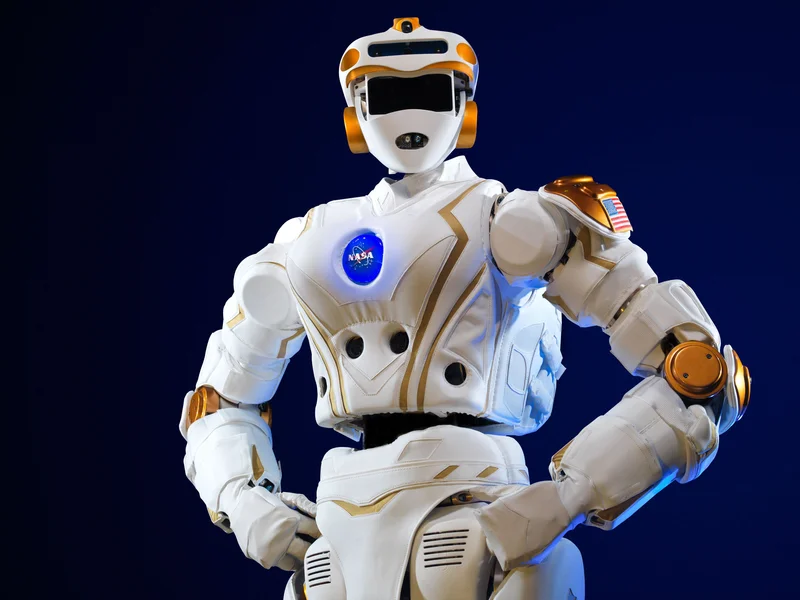
The Bigger Picture: A World Transformed
So, what's the "Big Idea" here? It's not just about robots doing our chores. It's about unlocking human potential. Imagine a world where people are freed from mundane, repetitive tasks, allowing them to focus on creativity, innovation, and personal growth. A world where technology empowers us to live healthier, more fulfilling lives.
This is where Tesla's bet on humanoid robots truly shines. By creating machines that can seamlessly integrate into our existing environments, they're paving the way for a future where technology is truly human-centric. It's a bold vision, and it's not without its challenges. But as Brian Hopkins, a Forrester analyst, points out, the falling costs of components, combined with improvements to robot dexterity and AI, are making this vision increasingly feasible. As the BBC reports, human-shaped robots loom large in Musk's Tesla plans, indicating a significant strategic direction for the company.
We are on the cusp of a new era, a robotics revolution that will reshape our world in ways we can only begin to imagine. And the comments I'm seeing on platforms like Reddit? The excitement is palpable. People are genuinely excited about the possibilities.
One user wrote, "This is like the industrial revolution all over again, but this time, it's powered by AI!" Another commented, "I can't wait to see how this technology will improve the lives of people with disabilities." This is the kind of optimism that fuels innovation, the belief that technology can be a force for good.
A Future of Limitless Possibilities
So, are Tesla's humanoid robots rooted in science fiction or reality? I say it's both. Science fiction inspires us to dream, to imagine what's possible. Reality grounds us in the challenges and complexities of bringing those dreams to life. And Tesla, with its ambitious vision and relentless pursuit of innovation, is bridging that gap, bringing us closer to a future where human-shaped robots are not just a novelty, but an integral part of our lives.
The Dawn of the Age of Embodied Intelligence
Related Articles
Robot: Autonomous catalysis research – What we know
AI Can Cook, But Can It *Think*? The breathless headlines about AI-driven research are coming thick...

robot: what happened and what we know
The Sun's Algorithm Thinks You're a Robot: A Data Analyst's Reality Check News Group Newspapers, the...