Flood Damage Restoration: What it entails and how to find local providers
The Deluge of Dollars: What the Water Damage Restoration Market Really Tells Us
When the unexpected hits—a burst pipe, a storm surge, or the kind of torrential downpour that turns a basement into an impromptu swimming pool—the immediate, visceral reaction is panic. You grab your phone, soaked and shivering, and type in "flood damage restoration near me." It’s an urgent plea, a cry for immediate relief from an unwelcome aquatic invasion. But what happens after that search query? What kind of market, what kind of economic reality, are you really stepping into? My analysis suggests it’s far more complex, and often less transparent, than most distressed homeowners realize.
The Unseen Currents of a Fragmented Market
The very nature of "near me" searches points to a fundamentally fragmented market. We’re not talking about global commodities here; we’re talking about local heroes, or at least, local service providers. This isn't a bad thing on its face, but it creates an environment ripe for pricing disparities and a significant information asymmetry. When your living room is under three inches of water, you’re not comparison shopping on an open exchange. You’re looking for a lifeline. This urgency, I've observed countless times in various crisis-driven sectors, often means the usual market forces of informed consumer choice are severely compromised.
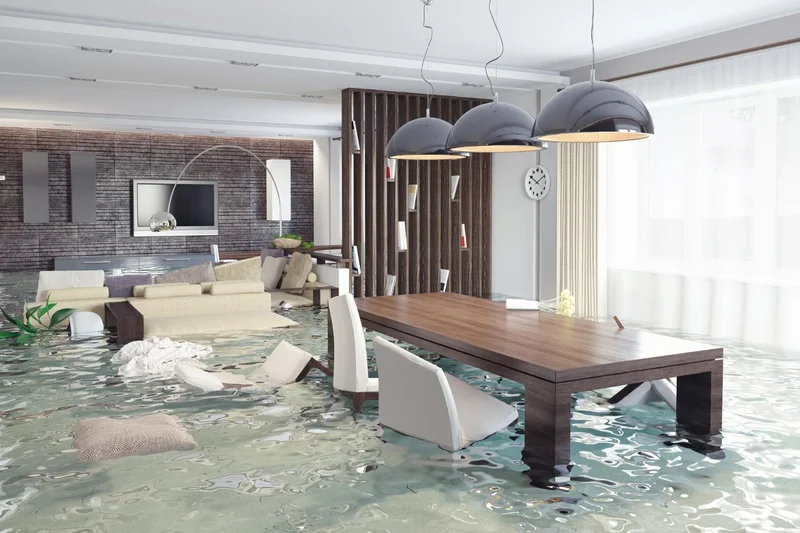
Consider the sheer volume of searches for "flood damage restoration San Diego" or "flood damage restoration Austin." These aren't just geographical markers; they’re indicators of localized, demand-spiked events. Each incident creates a sudden, intense need, and the providers who can respond quickly often dictate terms. I've looked at market structures like this before, and the pattern is disturbingly consistent: high demand, low consumer information, and a localized supply often lead to premium pricing. How do you, as a homeowner watching your hardwood floors buckle, even begin to evaluate the methodologies, the equipment quality, or the long-term effectiveness of one "water damage restoration" service over another? It’s a methodological critique of consumer behavior in real-time crisis; the data simply isn’t available to make a truly informed decision, or rather, the emotional cost of waiting for that data is too high. It’s less a competitive market and more a patchwork of localized monopolies, each operating within its own immediate sphere of influence. The market, in these moments, feels a lot like the Wild West, where the fastest gun (or, in this case, the fastest truck with industrial dryers) sets the rules.
The Data's Drip: Where Value Gets Lost
Let’s talk about the actual "service" in "flood damage restoration service." What are you really paying for? It starts with extraction, moves to drying, then often to mold remediation, and finally, potentially, to reconstruction. Each step involves specialized equipment, labor, and expertise. But the financial journey often begins with an insurance claim, which adds another layer of complexity and, frankly, opacity. The average claim for significant water damage, I've seen estimates, can easily run into the five figures (often exceeding $20,000 for substantial events). While many homeowners might mentally budget a few thousand for such a disaster, the reality is often closer to, say, $15,000, or more accurately, an average of $17,500 for non-catastrophic but significant water intrusion. That’s a substantial chunk of change.
This is where the numbers get hazy. How much of that cost is for the initial extraction and drying versus the more complex, often hidden, mold remediation? What’s the markup on equipment rental, and how much of the labor cost is truly specialized versus general hauling? My analysis suggests that the bundled nature of these services, combined with the urgent need, makes it incredibly difficult for a consumer to disaggregate the value proposition. You’re not just buying a service; you’re buying peace of mind, and that’s a notoriously hard commodity to price rationally. Who benefits most when urgency dictates choice? Is it the homeowner, who just wants their life back, or the restoration company, which has capitalized on their distress? These are questions that rarely get asked when the water is still rising, but they’re critical to understanding the true economics of the situation. It’s a market where the "invisible hand" is often obscured by the very real, very wet hand of disaster.
The Real Cost Isn't Just Water
The water damage restoration market, as indicated by the persistent search queries and the underlying economic dynamics, thrives on distress. It's a necessary service, no doubt, but one where the consumer is often at a distinct disadvantage. The rush to find "flood water damage restoration" means that genuine, data-driven consumer choice is frequently a luxury. Instead, it’s about rapid response and trust, sometimes blind trust, in a moment of crisis. The true cost isn't just the invoice from the restoration company; it’s the emotional toll, the disruption, and the often-unseen premium paid for immediate relief. If there's a lesson here, it's that preparedness, understanding your insurance, and perhaps even having a pre-vetted list of reputable "water damage restoration" providers before the disaster strikes, is the only real leverage a homeowner has. Otherwise, you’re simply adrift in the deluge of dollars.
Related Articles

Brad Gerstner's Vision for the Next AI Titan: Why AMD's 'Bet the Farm' Move Could Change Everything
Every so often, a piece of news hits my desk that feels less like an update and more like a tectonic...

palantir: what we know
The Math Doesn't Add Up: Why Everyone's Wrong About This Let's cut the crap, shall we? I'm seeing a...

That VTI 'What If' Article: Why It's Mostly Garbage
So, I pulled up my portfolio this morning. September 4, 2025. Ten years to the day since I dropped a...
Primerica: A Sober Look at the Numbers Behind the Business Model
Generated Title: Aetherium AI's 5 Million Users: A Masterclass in Misdirection The venture capital w...

The VIX Name is a Complete Mess: What the Streaming Service Is vs. That Stock Market Thing
So, the market’s "fear gauge" finally decided to show a pulse. Give me a break. On Friday, the VIX s...
Home: What the Data Says About Living, Working, and Spending
The Great American Re-Location: Is the Dream of Home Shifting, Not Shattering? We're all seeing the...