US-China Relations: Trade War Concerns and AI Race
GENERATED TITLE: Is the US-China "G-2" a Mirage Built on Shifting Data?
Okay, let's cut to the chase. The idea of a "G-2" – a world effectively co-managed by the US and China – keeps resurfacing. Trump floated it again, and the foreign policy wonks are, predictably, having conniptions. How Trump’s ‘G-2’ framing for US-China relations could impact allies But before we all get worked up about a potential US-China power-sharing agreement, let's look at the data.
The Illusion of Parity
The "G-2" concept, as Bergsten originally framed it, hinged on the idea that US-China cooperation was essential for global economic stability. He wasn't wrong, exactly. Both nations are undeniably huge economic players. But parity? That's where the numbers get interesting. China's economic growth has been undeniable, yet several factors contribute to the illusion of parity.
China’s new aircraft carrier, the Fujian, is a prime example. State media trumpets it as a "significant step forward" and evidence of China's rapidly expanding navy (now the world's largest by ship count). Okay, fair enough. More ships. But what about capabilities? Numbers alone don’t win wars (or trade negotiations, for that matter). The Fujian's electromagnetic catapults are impressive (allowing for faster launch speeds), but how do they stack up against US carrier technology that’s been refined over decades? That's a harder number to quantify, but it's crucial.
And this is the part of the analysis that I find genuinely puzzling. We're comparing raw ship numbers versus technological sophistication. It's like comparing the number of horses in a cavalry to the horsepower of a tank.
Rare Earths and Reality Checks
The rare-earth element situation is another data point that needs a closer look. The supposed "deal" to ease export restrictions is already hitting snags. The US claims China agreed to eliminate past controls as well, a condition Beijing hasn't confirmed. A discrepancy, to be sure, but more importantly, consider the context. China controls a massive share of the rare earth market (estimates vary, but often above 80% of global production capacity). Even if restrictions ease, that fundamental imbalance remains.
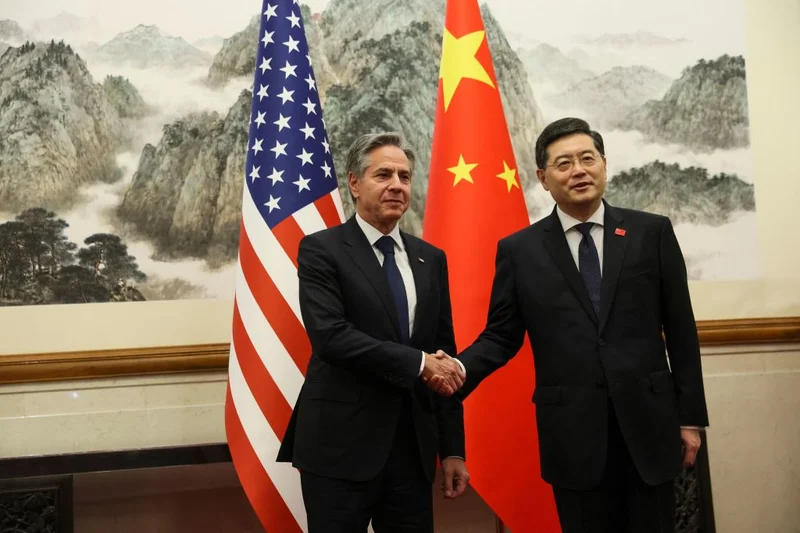
The US's leverage in this situation is… well, limited. We can talk about diversifying supply chains and developing domestic mining, but those are long-term projects. In the short term, the US is still heavily reliant on China. The data is clear: China holds a critical choke point in a supply chain vital to everything from smartphones to missile guidance systems.
Now, I'm not saying China is an invincible economic juggernaut. Far from it. They have their own internal problems: a real estate crisis, demographic challenges, and increasing social unrest. But the narrative of perfect parity with the US? It's, at best, premature. At worst, it's a dangerous oversimplification.
What happens when those long-term projects actually come to fruition, and the US is less reliant on Chinese rare earth elements? What retaliatory measures will China enact to maintain their economic standing?
The Mirage Persists
The "G-2" framing, even if strategically intended, risks creating a self-fulfilling prophecy. If the US starts treating China as an equal, even when the underlying data doesn't fully support that assertion, it could embolden China to act more aggressively. The revival of the Quad grouping—comprising India, Japan, Australia, and the US—in 2017 was a direct response to China's assertive actions in the Indo-Pacific. Those actions didn't arise from a position of equality, but from a perceived position of strength.
The question isn't whether the US and China should cooperate on global issues; it's whether the "G-2" framework accurately reflects the current power dynamics. My analysis suggests it does not. Not yet, anyway.
Smoke and Mirrors: The Data's the Thing
Related Articles

Dan Schulman Named New Verizon CEO: What His PayPal Past Means for Verizon's Future
Verizon’s New CEO Isn’t About 5G. It’s About a Quiet Panic. The market’s reaction to the news was, i...

Hims Stock Surges 39%: A Data-Driven Look at the Surge
The ticker for Hims & Hers Health (HIMS) has been on a tear. A 39% surge in a single month is the ki...

Cracker Barrel Thanksgiving Dinner: Menu, Hours & Open Status
Cracker Barrel's Thanksgiving Playbook: A Data-Driven Dissection of Our Holiday Habits The annual pi...
Dow Jones Stock Markets: Futures Uncertainty and Today's News
A Sea of Noise, But Where's the Signal? The relentless churn of the internet is a sight to behold. E...

Student Loan Repayment Changes: What's Happening and the Reactions
Trump's Loan Forgiveness Changes Face Swift Legal Fire: A Sign of Hope? Okay, folks, let's dive into...

China's SSE Index Upgrade: Why This Signals a New Era for Global Tech & Finance
I spend most of my days thinking about the future. I look at breakthroughs in quantum computing, AI,...